
What That Racket Is Actually Costing You
A garage door opener that bangs, grinds, or rattles every time it runs isn't just annoying—it's a warning you're paying to ignore. Every slap of a loose chain or squeal from a dry roller is friction working against your opener's motor and gears. Leave it through another round of Alabama's humidity swings and afternoon storms, and that friction turns into real wear. Warm, wet days followed by cooler nights make wood door panels and frame hardware expand and contract, which loosens bolts and brackets faster than you'd expect. A noisy opener that gets ignored through fall often becomes a stripped gear, a burned-out motor, or a chain that jumps its sprocket entirely by winter—repairs that cost far more than the fixes below.
Step-by-Step: Quieting Your Opener
Tools You'll Need
- Socket wrench set or adjustable wrench
- Step ladder
- Silicone or lithium-based garage door lubricant (not WD-40 or grease)
- Replacement nylon rollers (if needed)
- Rubber vibration isolator kit
- Owner's manual for your opener model
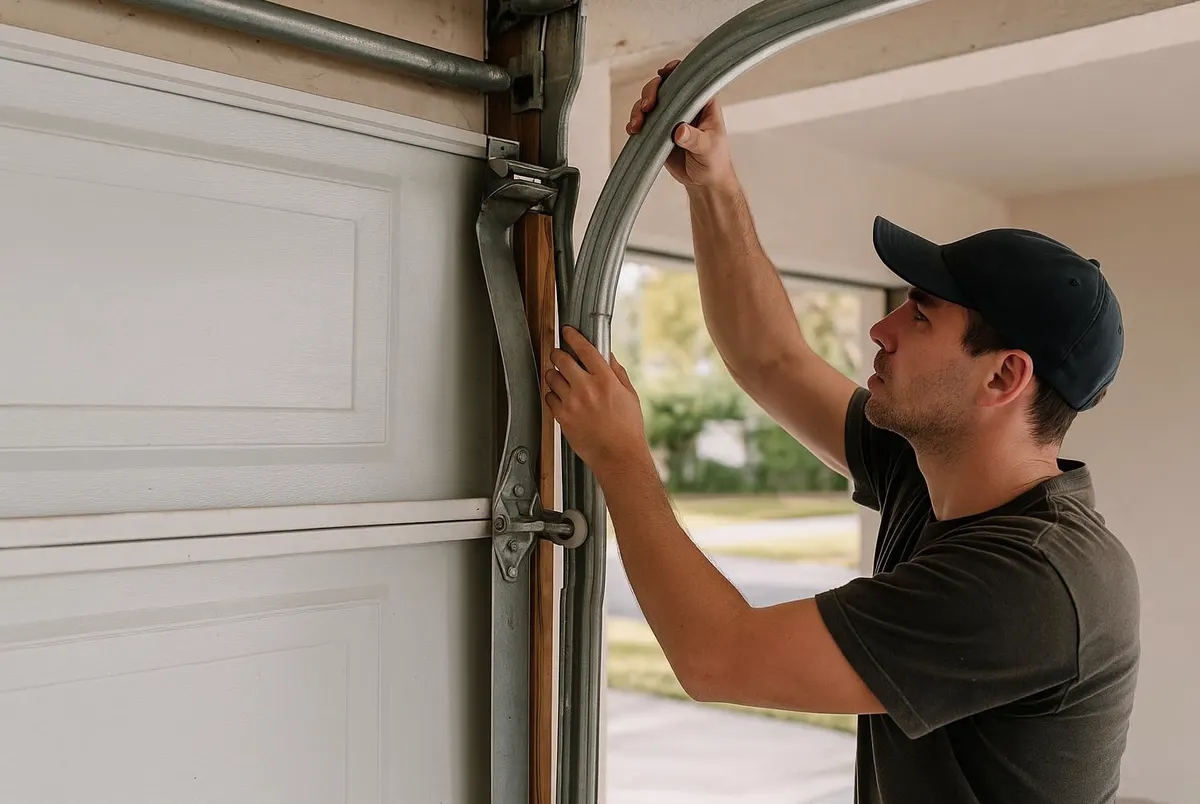
- Tighten every bolt and bracket. Start at the motor unit and work down the track, checking the mounting bracket, hinges, and track bolts. Humidity causes metal and wood to expand and contract repeatedly, and that movement backs out fasteners over time. This is a straightforward homeowner task—just go bolt by bolt with a wrench.
- Lubricate the moving parts, not everything in sight. Apply silicone or lithium-based lubricant to rollers, hinges, the chain or belt, and the opener's drive screw. Skip WD-40; it's a solvent that attracts dust and dries out fast in humid air, which makes noise worse within weeks.
- Inspect your rollers and replace the worn ones. Metal rollers without nylon housings are the loudest culprits and wear fast in moisture-heavy conditions. If you see flat spots, cracking, or hear a distinct grinding as they pass through the track, swap in sealed-bearing nylon rollers. This is a DIY job if the track itself is straight. A bent or rusted track is a job for a technician.
- Check and adjust chain or belt tension. A sagging chain slaps the rail with every open and close. Most openers have a tensioning nut near the motor head—consult your manual for the right amount of slack. If you've adjusted it and it still sags heavily or jumps the sprocket, that points to a worn chain needing replacement, not just tightening.
- Isolate the motor from the ceiling joists. A lot of the noise homeowners hear inside the house isn't the door at all—it's vibration traveling through the mounting bracket into the framing. Rubber vibration isolators, installed between the opener's mounting bracket and the ceiling, cut that transfer noticeably. This takes about twenty minutes and basic tools.
- Consider a belt-drive swap. If you've done all of the above and the opener is still loud, the chain-drive mechanism itself may simply be the problem. Belt-drive openers use a reinforced rubber belt instead of metal chain, running dramatically quieter and holding up better against the swelling and contracting that humidity causes in a chain's metal links. This is where the project moves from DIY to professional: a full opener swap means matching horsepower to your door's weight, rewiring safety sensors, and resetting travel limits correctly. Get this wrong and you risk a door that reverses unpredictably or doesn't seal against wind-driven rain.
When Noise Means Something More Serious
A loud bang followed by the door refusing to open, a visibly bent track, or a grinding sound from near the spring itself are not opener problems—they're signs of a failing spring or cable under tension. Torsion springs store enough force to cause serious injury if they let go while you're working near them. If you hear a sharp pop or see a gap in a coiled spring, stop and call a technician. Don't attempt a DIY fix on anything involving the springs or cables.
When to Call Warrior Garage Door Works
If you've worked through the tightening, lubrication, and roller checks and the door is still noisy—or if the fix clearly calls for a belt-drive opener—that's when to bring in Warrior Garage Door Works. Our Garage Door Opener Repair & Installation service covers everything from diagnosing a failing motor to a full belt-drive conversion sized correctly for your door. We also offer Garage Door Maintenance visits that catch loosening hardware, rust starting on tracks and hinges, and roller wear before they turn into noise complaints or bigger repairs—timely heading into the wetter months ahead.
If your garage door opener is driving you up the wall, give Warrior Garage Door Works a call. We serve Warrior, Kimberly, Morris, Hayden, Trafford, Blountsville, Gardendale, and Locust Fork, and we'll get it running quiet and right.